March 12, 2026
If you’ve ever opened a mobility or yoga session inside the app and thought, “I used to be flexible,” you’re not alone.
It’s one of the most common thoughts people have when they return to movement after a few years of busy schedules, long workdays, and bodies that don’t quite move the way they used to.
Maybe your lower back feels stiff in the morning.
Maybe your hips tighten up after sitting too long.
Maybe your shoulders don’t rotate as easily as they once did.
And here’s something important to understand: flexibility isn’t actually the main goal.
The real goal is mobility.
Mobility is the quiet superpower that makes everyday life easier. It’s what allows you to stand up from the floor without effort, reach overhead comfortably, twist in your seat while driving, or take a long walk without your back complaining.
For adults over 45, mobility becomes even more important.
In the United States, back pain is one of the most common health complaints. Arthritis is a leading cause of disability, and falls become a significant health risk as people age.
But improving mobility doesn’t require extreme workouts or complicated yoga routines.
What actually helps most is consistent, gentle movement that keeps the spine and major joints active.
Even a short, guided routine can help maintain joint health and improve how your body feels throughout the day.
Why Mobility Matters More After 45
As we move through our forties and fifties, the body begins to change in subtle ways.
Muscles gradually lose elasticity.
Joints become slightly stiffer.
Long hours of sitting begin to affect the hips, spine, and shoulders more than they did before.
Many people using fitness apps today spend most of their day working at a computer, driving between appointments, or sitting in meetings. By evening, they often notice tight shoulders, compressed lower backs, and hips that feel reluctant to move.
This is exactly why most modern health guidelines recommend a combination of movement types:
- cardiovascular activity
- strength training
- balance work
- flexibility and mobility
Yoga doesn’t replace these elements, but it supports them beautifully.
A short yoga session encourages controlled movement through the spine and joints while strengthening the muscles that stabilize those areas.
Research examining yoga for chronic lower-back pain has even shown small to moderate improvements in pain and function, depending on the program and duration.
But beyond the research, the biggest benefit many people notice is simple:
They move easier.
They breathe deeper.
And everyday activities start to feel smoother again.
The Five Yoga Poses I Recommend Most for Adults Over 45
Inside many mobility and recovery programs, you’ll notice that certain yoga movements appear again and again.
That’s not by accident.
Some poses consistently provide the most benefit for everyday mobility, especially for people over 45.
These poses focus on the areas that influence daily movement the most:
- spine
- shoulders
- hips
- knees
- ankles
1. Cat–Cow Pose (Marjaryasana–Bitilasana)
If there is one movement that almost every mobility program includes, it’s Cat–Cow.
This gentle sequence mobilizes the entire spine while coordinating movement with breathing.
Start on your hands and knees with your wrists under your shoulders and your knees under your hips. Allow the spine to settle into a neutral position.
As you inhale, allow your belly to soften slightly while the chest lifts forward and the tailbone tips upward, creating a gentle arch through the spine.
As you exhale, draw the abdomen inward and round the spine, letting the chin move toward the chest as the back domes upward.
The movement should feel slow and fluid, almost like you’re gently massaging each segment of your spine.
For people who spend much of the day sitting, this movement often reduces stiffness almost immediately.
2. Downward-Facing Dog (Adho Mukha Svanasana)
Downward Dog is one of the most recognizable yoga poses, but it’s also a surprisingly effective full-body mobility exercise.
It stretches the hamstrings and calves, opens the shoulders, lengthens the spine, and improves ankle mobility.
From hands and knees, tuck your toes under and lift your hips upward and back, forming an inverted V shape.
One helpful reminder: your knees can stay bent.
Many people over 45 actually benefit more from bent knees because it allows the spine to lengthen comfortably without strain.
The goal is not to push the heels to the floor.
The goal is space in the spine and shoulders.
3. Low Lunge (Anjaneyasana)
If you sit for long periods during the day, your hip flexors are probably tighter than you realize.
This is one of the most common mobility restrictions adults experience.
Low Lunge gently reintroduces hip extension, which is essential for walking, climbing stairs, and standing upright comfortably.
Step one foot forward between your hands and lower the back knee to the mat.
Placing a folded towel or blanket under the back knee can make the position more comfortable.
As the torso lifts, allow the hips to move slightly forward while keeping the lower back long and supported.
Most people feel the stretch along the front of the hip and thigh of the back leg.
4. Bridge Pose (Setu Bandha Sarvangasana)
Bridge Pose strengthens the muscles that support the lower back.
Many people with back discomfort actually have underactive glute muscles, which causes the lower back to work harder during daily activities.
Bridge helps restore balance.
Lie on your back with your knees bent and your feet hip-width apart.
Press gently through your feet and lift the hips upward while keeping the neck relaxed.
Focus on engaging the glutes and hamstrings rather than pushing into a deep arch in the lower back.
Even a small lift can activate the muscles that stabilize the pelvis during walking.
5. Supine Twist (Supta Matsyendrasana)
After moving the spine in several directions, it’s helpful to finish with a gentle twist.
Supine Twist is calming and restorative.
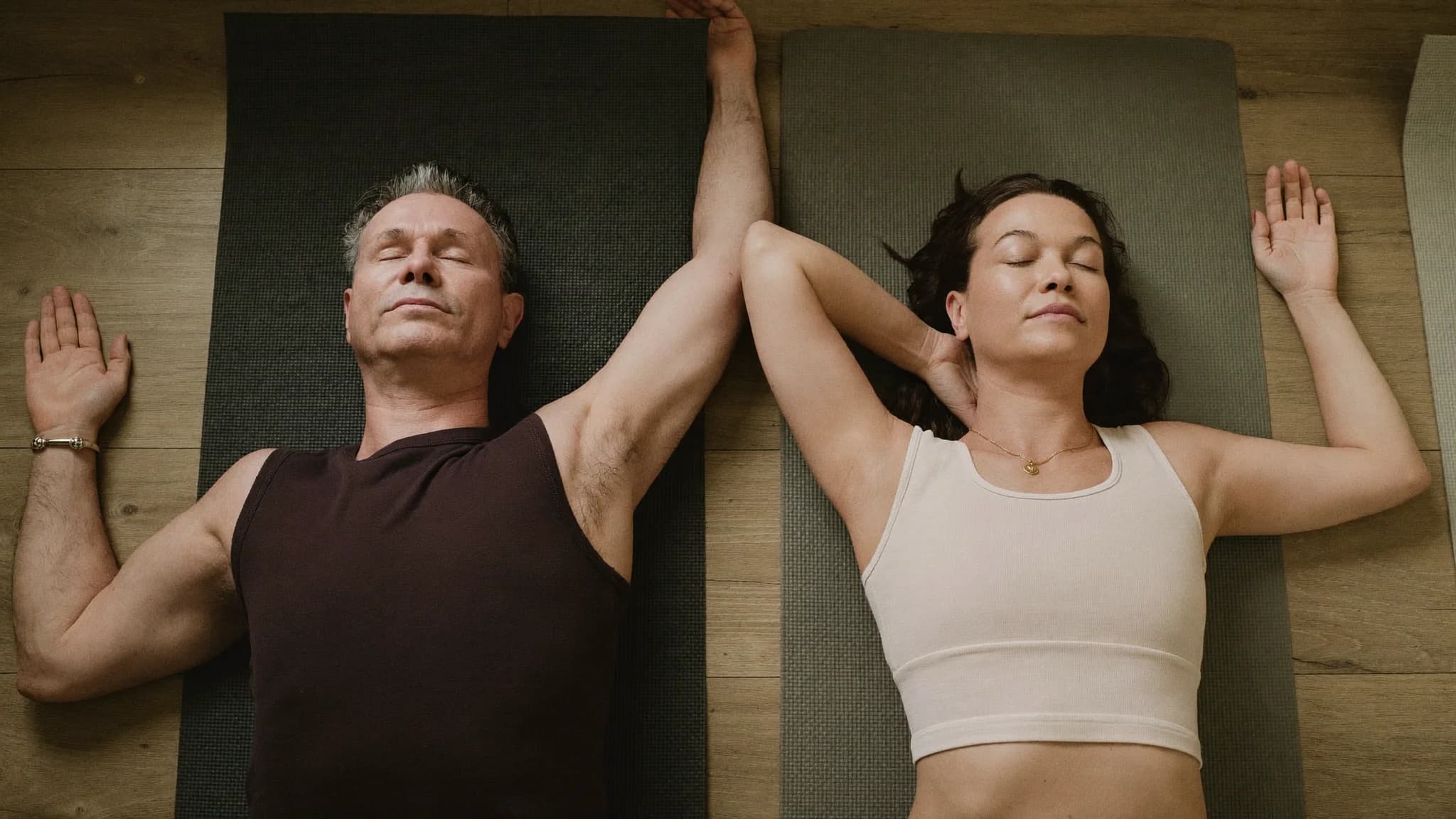
From a lying position, bring the knees toward your chest and slowly lower them to one side while extending your arms outward.
Your opposite shoulder can gently reach toward the floor.
The goal is relaxation rather than depth.
Many people benefit from placing a pillow or folded blanket under the knees so the body can relax into the twist.
This pose often becomes a quiet moment where breathing slows and the nervous system settles.
A Simple 10–15 Minute Routine
Many people assume yoga sessions must be long.
But consistency matters far more than duration.
A simple routine might look like this:
- 1 minute Cat–Cow
- 5–8 breaths in each pose
- 1–2 minutes Supine Twist
Altogether, that’s about 10–15 minutes.
Short guided sessions like this are exactly why many fitness apps include mobility routines that can be completed in a short amount of time.
Practiced regularly, they help maintain mobility in the spine and joints.
Small Movements During the Day Matter Too
Even if you complete a workout session, small movement breaks during the day can make a big difference.
Every few hours, try this quick reset:
- three deep breaths
- 20 seconds of seated Cat–Cow
- a short calf stretch against the wall
These micro-movements prevent stiffness from building up during long workdays.
FAQs
Is yoga safe for beginners over 45?
Yes. Gentle yoga and mobility sessions are designed to be accessible and can be adapted for different fitness levels.
How often should I practice these poses?
Three to five times per week is ideal, though even short sessions can be beneficial.
Can yoga reduce stiffness?
Regular yoga encourages movement in the spine and joints, which can help reduce stiffness and improve mobility.
Do I need special equipment?
A yoga mat and a cushion or folded blanket are usually enough for most beginners.
Final Thoughts
Mobility after 45 doesn’t require complicated routines or extreme flexibility. What matters most is consistency. Small, regular movements that keep the spine and joints active so your body continues to feel strong and capable.
In the Younger Fitness app, you can find guided mobility and yoga programs designed specifically for people 45+, making it easier to stay consistent and support your joints, strength, and overall movement.
See you inside the app.
Because the real goal isn’t touching your toes.
It’s moving through life with strength, comfort, and confidence.
Sources
-
National Institute on Aging (NIA). Exercise and Physical Activity for Older Adults.
-
National Institutes of Health (NIH). Yoga for Chronic Low Back Pain.
-
U.S. Department of Health and Human Services. Physical Activity Guidelines for Americans.
-
Centers for Disease Control and Prevention (CDC). Physical Activity and Healthy Aging.
-
Harvard Health Publishing. Stretching and Mobility for Healthy Aging.