May 27, 2026
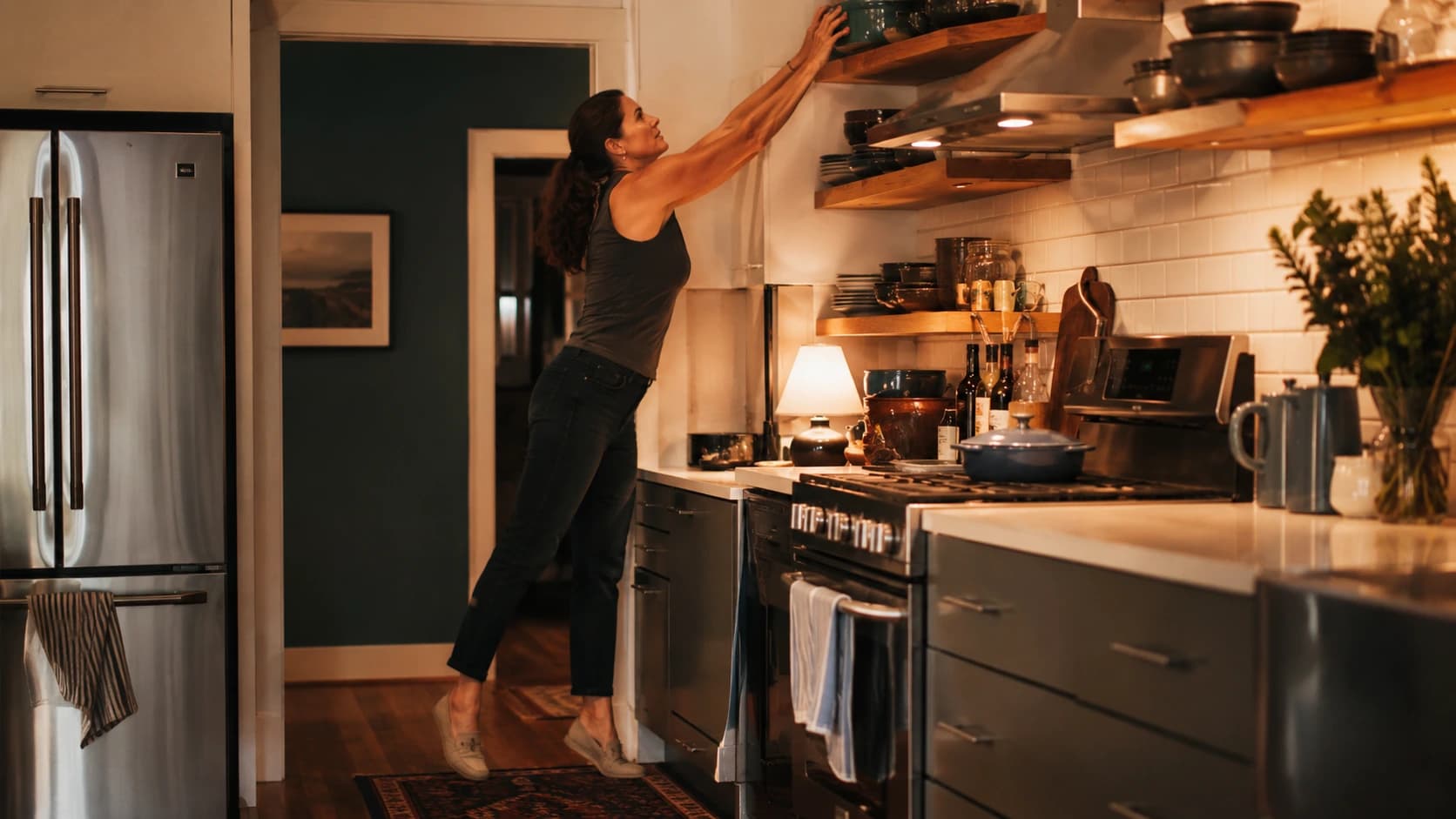
Here is a truth that most fitness content will not lead with: the goal of core training after 45 has almost nothing to do with how your stomach looks, and almost everything to do with whether you can get up off the floor without thinking twice about it, carry groceries from the car in one trip, step off a curb without bracing yourself, or reach into a high cabinet without feeling pain in your lower back.
That is what a strong core actually does for you in real life and for women navigating the hormonal shifts of perimenopause and menopause, building that kind of functional strength is not optional. It is one of the most important investments you can make in the decades ahead.
What the Core Actually Is Because "Abs" Only Tells Half the Story
Most people think of the core as the muscles you can see or the ones that burn during a crunch but rehabilitation and sports medicine specialists describe it as something considerably more interesting: a coordinated pressure-and-stability system made up of the deep abdominal muscles, the lower back muscles, the diaphragm, and the pelvic floor, all working together like a natural internal brace that keeps your trunk organised while your arms and legs do the work of living.
Think about what that system has to manage on an ordinary day. Standing up from a sofa, twisting to load the dishwasher, lifting a bag from the floor, stepping over something on the pavement, or recovering your balance when you stumble slightly on an uneven surface. None of those movements depend on visible abs. Every single one depends on the trunk's ability to hold position, transfer force, and keep you stable while weight shifts from one side of your body to the other.
Research in healthy older adults consistently links stronger trunk muscles with better performance on walking, chair-stand, and balance tasks and a recent systematic review and meta-analysis found that core training significantly improves both dynamic and static balance in older adults, which matters enormously for fall prevention and long-term independence.
The science is clear on one more thing worth knowing: core training works best as part of a bigger picture that includes walking, lower-body strengthening, and balance practice not as a standalone "abs fix," but as one essential piece of a movement strategy that keeps you capable for the long haul.
Why Midlife Changes the Core Conversation Completely
For women over 45, core strength becomes relevant in ways it simply wasn't a decade earlier and the reason is hormonal as much as it is structural.
As estrogen declines during perimenopause and menopause, several things happen simultaneously that directly affect how your core functions and how your body responds to training:
- Bone density changes which means the spine needs more muscular support and certain high-load, high-flexion exercises that were once fine may now need to be reconsidered
- Body composition shifts lean muscle mass naturally decreases, making deliberate strength work more important rather than less
- Connective tissue becomes more vulnerable which affects how the pelvic floor and abdominal wall respond to pressure and load
- Recovery slows down meaning smart, progressive training produces better results than intensity for its own sake
- Balance and proprioception can become less reliable which is exactly where a well-trained core provides the most meaningful protection
None of this means training harder. It means training with more intention, prioritising control over load, breathing over bracing, and neutral-spine stability before anything more demanding.
For women who have or suspect diastasis recti, abdominal separation, that can persist or worsen after pregnancy and hormonal change this distinction matters particularly. High-pressure exercises like sit-ups and standard crunches can aggravate the condition rather than help it, while deep core work focused on the transverse abdominis, diaphragm, and pelvic floor working together as a coordinated system is both safer and more effective.
Five Home-Friendly Core Exercises Built for Women Over 45
The exercises below were chosen because they are genuinely home-friendly, require no equipment beyond a mat or carpeted floor, and are built around neutral-spine stabilisation rather than the kind of loaded spinal flexion that doesn't serve most women in midlife particularly well. They scale from complete beginner to consistently training, and the guiding principle throughout is simple: quality wins over volume.
A practical note before you begin: if you have osteoporosis, diagnosed diastasis recti, a history of spinal fractures, or any condition affecting your pelvic floor, take the modifications seriously; they exist for good reason. And if any exercise causes doming along the midline of your abdomen, pelvic heaviness, or downward pressure, that is your body asking you to back off, not push through.
- Abdominal Brace with Heel Slide
Lie on your back with knees bent and feet flat on the floor. Inhale gently into the sides of your rib cage, then as you exhale, let the lower abdomen narrow slightly imagine a gentle corset drawing in without sucking in hard or flattening your breath. Keeping the pelvis completely still, slowly slide one heel along the floor until the leg is as straight as you can comfortably manage while keeping your lower back relaxed, then return and switch sides. Five to eight reps per side is a solid starting point. If you are very new to this kind of work, spend a week simply learning the breathing and bracing pattern before adding the leg movement.
Dead Bug Heel Taps
- Lie on your back with arms reaching toward the ceiling and both hips and knees bent to roughly ninety degrees or keep feet lower to the floor if that position feels unstable. Brace gently, keep the lower back quiet against the floor, and slowly lower one heel toward the floor before returning and switching sides. The goal is to move the limb only as far as you can maintain a completely still, quiet trunk. Five to eight reps per side. This exercise is particularly valuable because it trains the trunk to resist extension while the limbs move exactly the demand your core meets during walking, reaching, and changing position.
Glute Bridge
- Lie on your back with knees bent, feet flat, and arms relaxed by your sides. Exhale, engage the abdominals and glutes, and push through your heels to lift the hips until your body forms a gentle diagonal from shoulders to knees. Hold for three to five seconds, then lower with control. Eight to twelve repetitions is a good starting range. Bridges matter in midlife because they connect the core to the hips and posterior chain the muscles that power standing up, climbing stairs, lifting, and every other movement that keeps you functionally independent.
Bird Dog
- Start on hands and knees with hands directly under shoulders and knees under hips. Brace gently, keep the spine completely neutral, and reach one leg back while the opposite arm reaches forward. Hold briefly, return with control, and switch sides. Five to eight reps each side. The point is steadiness, not height. If your hips are rotating or your lower back is arching, the reach is too far. This exercise trains anti-rotation control and cross-body coordination, which are exactly the demands your body meets when walking, carrying, and recovering from small stumbles. If kneeling is uncomfortable, a folded towel under the knees makes a meaningful difference.
Side Plank from Knees
- Lie on your side with knees bent and prop yourself up on one forearm. Exhale, lift the hips, and create a straight line from shoulders to knees. Hold for ten to twenty seconds, lower with control, and repeat on the other side. This is the most demanding exercise in the sequence because it challenges the lateral trunk and hip stabilisers that keep the pelvis level during walking and single-leg balance. Start with one round per side and build time before adding complexity. If the shoulder is uncomfortable, shorten the hold or spend more time with bridges and bird dogs before returning to this one.
The progression rule that makes all of this work: only make an exercise harder when you can complete every repetition with normal breathing, a quiet ribcage and pelvis, no doming, and no increase in pain during or after the session. That standard is more useful than any specific number of weeks or reps.
Making Core Work Actually Stick
The research on habit formation and exercise adherence is unambiguous about one thing: the workout you do consistently beats the perfect workout you do once and abandon.
For women in midlife with full lives and variable energy levels, the most effective strategy is attaching core work to things that already happen ten to fifteen minutes of the five exercises above on two or three days per week, paired with walking, stair climbing, or whatever moderate movement already feels manageable on other days.
Brief balance practice three times a week heel-to-toe walking, standing from sitting, or single-leg stance near a wall rounds out what the research consistently identifies as the most effective combination for functional strength and fall prevention.
You can also bring core awareness directly into daily life without adding a single dedicated session: before lifting a heavy bag, exhale gently and let the trunk engage before the arms do. When getting up from the floor, roll to one side and push up rather than forcing a sit-up pattern. When carrying groceries, notice whether the ribs are stacked over the pelvis or whether you are leaning and compensating.
These small adjustments are not dramatic. They are not photogenic. But they are the kind of consistent, intelligent movement that compounds quietly over months and years into the thing that actually matters: a body that stays capable, confident, and genuinely yours to depend on.
Citations
- Granacher U, Gollhofer A, Hortobágyi T, Kressig RW, Muehlbauer T.
The Importance of Trunk Muscle Strength for Balance, Functional Performance, and Fall Prevention in Seniors: A Systematic Review.
Sports Medicine. 2013. - Kahle N, Tevald MA.
Core Muscle Strengthening’s Improvement of Balance Performance in Community-Dwelling Older Adults: A Pilot Study.
Journal of Aging and Physical Activity. 2014. - Akuthota V, Nadler SF.
Core Strengthening.
Archives of Physical Medicine and Rehabilitation. 2004. - American College of Sports Medicine (ACSM)
Exercise Recommendations for Older Adults and Women in Midlife - Harvard Health Publishing
Why Core Strength Matters as You Age - Mayo Clinic Staff
- Core Exercises: Why You Should Strengthen Your Core Muscles
- National Institute on Aging
Exercise and Physical Activity for Older Adults - Bo K, Hilde G.
Does It Work in the Long Term? A Systematic Review on Pelvic Floor Muscle Training for Women.
Neurourology and Urodynamics. 2013. - Lee DG, Lee LJ, McLaughlin L.
Stability, Continence and Breathing: The Role of the Diaphragm and Deep