July 15, 2026
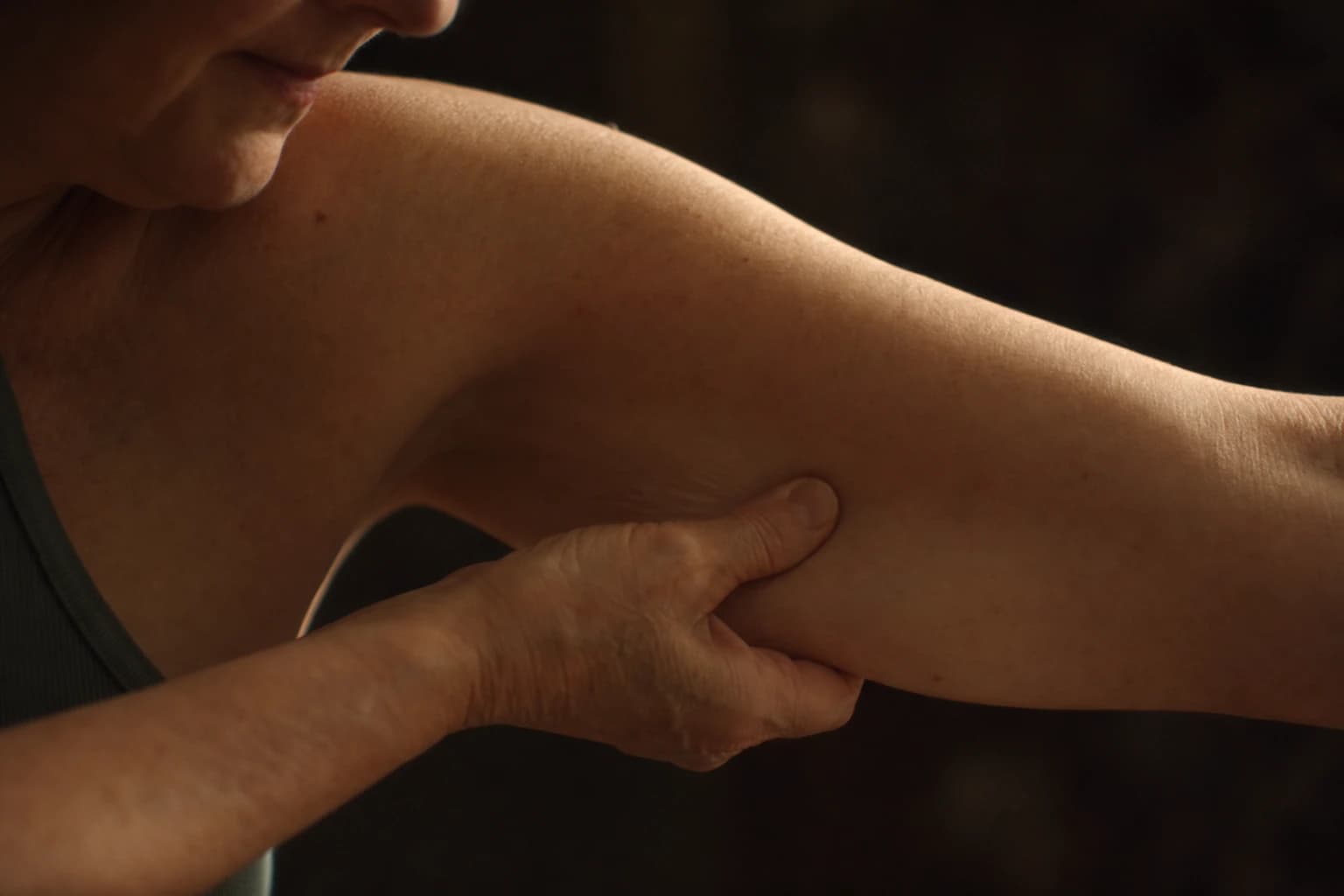
One of the biggest frustrations women describe during menopause is feeling like they've entered someone else's body.
The strange part is that the number on the scale often doesn't seem dramatically different.
"I weigh almost the same," they say.
"So why do my jeans fit differently?"
The answer lies in something far more important than body weight: body composition.
Research following thousands of women through the menopause transition has shown that the years surrounding the final menstrual period are accompanied by significant changes beneath the surface. Fat mass begins to increase, particularly around the abdomen, while lean muscle mass gradually declines. These shifts often occur even when body weight changes very little.
In other words, you can weigh exactly the same while carrying less muscle and more fat than you did just a few years earlier.
That explains why so many women describe feeling softer, weaker, or less athletic despite staying relatively active.
The scale simply isn't telling the whole story.
Recent research has reinforced these findings, suggesting that women lose measurable amounts of lean muscle as they move from premenopause into perimenopause and postmenopause. The hormonal transition itself—not simply chronological aging—appears to accelerate these changes.
Once you understand that, the conversation shifts.
The goal is no longer simply losing weight.
The goal becomes protecting the muscle you already have while continuing to build as much as possible.
Estrogen Does Far More Than Most Women Realize
When people hear the word estrogen, they usually think about reproduction, menstrual cycles, or hot flashes.
Few realize that estrogen also plays an important role inside your muscles.
Every time you exercise, your muscles experience tiny amounts of stress. That's completely normal. During recovery, your body repairs those microscopic tears, making the muscle stronger than before.
Estrogen helps support that entire process.
Researchers now understand that estrogen influences muscle protein synthesis, supports satellite cells responsible for muscle repair, improves mitochondrial function—the tiny structures that produce energy inside your cells—and helps regulate inflammation following exercise.
When estrogen levels begin declining during menopause, those systems don't suddenly stop working.
They simply become less efficient.
Recovery often takes longer.
Workouts may feel harder.
Building muscle requires a stronger stimulus than it once did.
Even everyday fatigue can become more noticeable because your muscles are no longer operating under exactly the same hormonal conditions.
This is one reason why women often say,
"I'm exercising just as much as I always have, but I'm not getting the same results."
They're not imagining it.
Their muscles are responding to a completely different hormonal environment.
Estrogen Isn't the Only Hormone Changing
Although estrogen receives most of the attention, menopause is much more than an estrogen story.
Think of your hormones as members of an orchestra.
When one instrument changes, the entire performance sounds different.
As ovulation becomes irregular, progesterone begins to decline. Testosterone gradually becomes less available. Growth hormone and insulin-like growth factor (IGF-1), both important for maintaining muscle tissue, naturally decrease with age. At the same time, many women experience increased abdominal fat, worsening insulin sensitivity, disrupted sleep, and higher levels of chronic stress.
Each of these changes may seem relatively small on its own.
Together, however, they create a body that finds it easier to lose muscle and harder to build it.
That is why menopause often feels like such a dramatic turning point.
It's rarely one hormone.
It's the combined effect of several hormonal systems changing simultaneously.
The Hidden Role of Insulin
Most people associate insulin with diabetes.
Few realize it also plays an important role in muscle health.
Healthy muscle acts like one of the body's largest storage sites for glucose. After you eat, insulin helps move glucose out of your bloodstream and into your muscles where it can be used for energy.
As estrogen declines, insulin sensitivity often decreases.
At the same time, muscle mass gradually falls.
Those two changes reinforce one another.
Less muscle means fewer places to store glucose efficiently.
Poorer insulin sensitivity makes it harder for muscles to use nutrients effectively.
Over time, this combination can contribute to increased abdominal fat, lower energy levels, and greater difficulty maintaining a healthy body composition.
It's one more reason why preserving muscle after menopause is about far more than appearance.
Muscle is one of your most important metabolic organs.
The more muscle you maintain, the better equipped your body is to regulate blood sugar, support mobility, and stay metabolically healthy as you age.
Stress, Cortisol, and Why Recovery Feels Different
If you've ever noticed that stressful periods seem to affect your body more than they used to, you're not alone.
Many women entering menopause report feeling less resilient during times of poor sleep, work stress, caregiving responsibilities, or emotional challenges.
Part of that experience may involve cortisol.
Cortisol is often called the stress hormone, although its role is much broader than that. It helps regulate metabolism, immune function, and energy availability. The problem arises when stress becomes chronic and recovery becomes limited.
Some research suggests cortisol patterns may change during the menopause transition, particularly when combined with poor sleep and persistent stress.
While cortisol itself isn't "bad," constantly elevated stress levels may make recovery from exercise slower, reduce training quality, and contribute to muscle breakdown over time.
That's why recovery deserves far more attention than it often receives.
Strength isn't built during your workout.
It's built afterward.
Why Muscle Matters More Than Ever After 45
One of the biggest misconceptions about muscle is that it's only important if you want toned arms or stronger legs. In reality, muscle is one of the most metabolically active tissues in your body, quietly working behind the scenes every minute of the day. It helps regulate blood sugar after meals, supports healthy bones by placing beneficial stress on the skeleton, protects your joints, improves balance, and allows you to continue doing the things that make life enjoyable, whether that's carrying your luggage through an airport, hiking with friends, playing with your grandchildren, or simply getting up from the floor without thinking twice.
That becomes especially important during and after menopause because muscle naturally becomes harder to maintain just as we begin needing it the most.
Researchers now consider muscle strength—not muscle size—the earliest and most reliable indicator of sarcopenia, the age-related loss of muscle mass and function. In other words, the ability to generate force is often more important than what your muscles look like.
This changes the conversation entirely.
Instead of asking, "How can I lose weight?" a better question becomes:
"How can I protect the muscles that will carry me through the next thirty years?"
That shift in perspective is one of the healthiest mindset changes a woman can make after 45.
Why What Worked at 35 May Not Work at 55
Many women become frustrated because they continue following the same exercise routine they've always done.
Three cardio classes a week.
A few walks.
Maybe a yoga class.
They stay active, yet their bodies continue changing.
That isn't because exercise has stopped working.
It's because the body you're training today isn't the same body you were training twenty years ago.
As estrogen declines, your muscles require a stronger reason to stay. Recovery changes. Muscle protein synthesis becomes less efficient. The body becomes more selective about where it invests its energy.
Think of it this way.
When you were younger, your body almost automatically rewarded moderate activity by helping maintain muscle.
After menopause, it asks a different question:
"Why should I keep this muscle?"
If your muscles aren't regularly challenged, your body gradually decides it doesn't need quite as much of them.
Fortunately, the opposite is also true.
When you consistently challenge your muscles, your body responds.
Perhaps not as quickly as it did at thirty-five.
But remarkably well nonetheless.
The Good News: Muscle Can Still Grow
This is the part that surprises many women.
Muscle doesn't stop responding after menopause.
It simply becomes more demanding.
Research consistently shows that women in their 50s, 60s, and even 70s continue to gain strength and build lean muscle through progressive resistance training. In fact, systematic reviews have found resistance training to be one of the most effective interventions for improving strength, preserving lean mass, and enhancing body composition in postmenopausal women.
That's encouraging because it means menopause doesn't close the door on becoming stronger.
It simply means strength has to become intentional.
The goal isn't to punish your body.
It's to give it a reason to adapt.
Progressive Resistance: The Signal Your Muscles Need
If there's one principle that matters more than almost anything else for muscle after menopause, it's progressive resistance.
The phrase sounds technical, but the idea is surprisingly simple.
Your muscles only adapt when they're asked to do something slightly more challenging than they've already mastered.
That challenge doesn't have to be dramatic.
It might mean lifting a slightly heavier dumbbell.
Adding one extra repetition.
Holding a plank for ten more seconds.
Using a stronger resistance band.
Or simply slowing down each movement so your muscles work a little harder.
Those small changes create the signal your body needs to preserve—and gradually build—muscle.
Without that signal, your muscles have little reason to stay.
Protein: Giving Your Muscles the Building Blocks
Exercise provides the stimulus.
Protein provides the raw materials.
One without the other is far less effective.
As women age, muscles become less responsive to protein than they were during early adulthood, a phenomenon researchers sometimes refer to as anabolic resistance. That doesn't mean protein stops working—it simply means your muscles benefit from a more consistent supply.
Rather than eating most of your daily protein at dinner, studies suggest your muscles respond better when protein is distributed throughout the day.
That could look like eggs or Greek yogurt at breakfast, chicken or lentils at lunch, and fish, tofu, or lean meat at dinner.
Small adjustments like these often make a greater difference than people expect because they support the recovery process happening after every strength workout.
The goal isn't chasing an extremely high-protein diet.
It's making sure your muscles have what they need to respond to the work you're asking them to do.
Can Hormone Therapy Prevent Muscle Loss?
This is one of the questions women ask most often.
The answer is nuanced.
Hormone therapy remains the most effective treatment for symptoms such as hot flashes, night sweats, and many menopause-related sleep disturbances. It also plays an important role in preventing bone loss for appropriate candidates.
When it comes to muscle, however, the picture is more complicated.
Large reviews have found that hormone therapy alone does not consistently increase muscle mass or strength in all postmenopausal women. Some smaller studies suggest that women who begin estrogen therapy early in menopause may experience slightly greater improvements from resistance training than women who do not use hormone therapy, but those findings are not strong enough to recommend hormone therapy solely for building muscle.
Think of hormone therapy as something that may help create a better environment for training in some women rather than replacing training itself.
Muscle still responds best to resistance exercise.
What About Creatine?
Creatine has become one of the most researched supplements in sports nutrition, and its benefits are no longer limited to young athletes.
Recent research suggests creatine may provide modest improvements in lean muscle mass and strength in postmenopausal women, particularly when combined with resistance training.
Notice the key phrase:
Combined with resistance training.
Creatine is not a shortcut.
It's an assistant.
Without challenging your muscles, the benefit is likely to be small.
For healthy women, creatine monohydrate is generally considered safe, although anyone with kidney disease or complex medical conditions should speak with their healthcare provider before starting supplementation.
The Bigger Picture
Perhaps the most important lesson menopause teaches us is that healthy aging isn't about finding one magic hormone, one perfect supplement, or one miracle workout.
Your muscles respond to the combined effect of everything you do.
They respond to strength training.
They respond to protein.
They respond to sleep.
They respond to stress.
They respond to consistency.
None of these habits works in isolation.
Together, however, they create an environment where your muscles can continue adapting for decades.
Final Thoughts
It's easy to blame menopause when your body begins changing.
And to be fair, hormones absolutely matter.
They influence how your muscles recover, how efficiently they repair themselves, how your body stores fat, and how easily you maintain strength.
But hormones are not your destiny.
They change the environment your muscles live in.
They do not eliminate your ability to become stronger.
That is perhaps the most hopeful message modern research has given women.
Yes, menopause changes the rules.
It does not end the game.
You may need more resistance training than you once did. You may need to pay closer attention to protein, recovery, and sleep. Progress may happen more gradually than it did twenty years ago.
But your muscles are still listening.
Every walk.
Every strength workout.
Every nourishing meal.
Every night of good sleep.
Every small decision tells your body the same thing:
"These muscles are still needed."
And when your body receives that message consistently, it has an extraordinary ability to adapt—at 45, at 55, and well beyond.
References
- Greendale GA, et al. Changes in Body Composition and Weight During the Menopause Transition. JCI Insight. 2019.
- Menzies C, Lundsgaard AM, Hansen M. Menopause, Female Sex Hormones, Skeletal Muscle Mass and Muscle Protein Turnover in Humans. Journal of Cachexia, Sarcopenia and Muscle. 2026.
- Khalafi M, et al. Effects of Exercise Training on Body Composition in Postmenopausal Women: A Systematic Review and Meta-analysis. Frontiers in Endocrinology. 2023.
- González-Gálvez N, et al. Resistance Training Effects on Healthy Postmenopausal Women: A Systematic Review and Meta-analysis. Maturitas. 2024.
- Black KE, et al. The Impact of Protein in Postmenopausal Women on Muscle Mass and Strength. Nutrients. 2024.
- The Menopause Society. Hormone Therapy Position Statement. 2022.
- Dam TV, et al. Transdermal Estrogen Therapy Improves Gains in Skeletal Muscle Mass After Resistance Training. Frontiers in Physiology. 2021.
- Naddafha S, et al. Creatine Monohydrate for Lean Mass, Strength, and Bone Density in Postmenopausal Women. Journal of Dietary Supplements. 2026.
- Cruz-Jentoft AJ, et al. Sarcopenia: Revised European Consensus on Definition and Diagnosis. Age and Ageing. 2019.