May 28, 2026
There is a particular kind of nutritional advice that gets repeated so often it starts to feel like settled science, and in the world of protein it usually sounds something like this: eat more chicken, add some eggs, maybe throw in some Greek yoghurt, and you will be fine.
Which is genuinely useful advice unless you are one of the significant number of women who simply do not eat meat, whether for ethical reasons, environmental ones, health preferences, or the perfectly valid reason that you have never particularly enjoyed it and see no compelling reason to start now.
For women in perimenopause and menopause, the protein conversation is more urgent than most people realise and the good news is that getting enough protein without meat is not only possible but entirely compatible with building and maintaining the muscle, bone density, and hormonal resilience your body needs.
Why Protein Becomes Non-Negotiable After 45
As estrogen declines during perimenopause and menopause, the body's ability to build and maintain lean muscle tissue decreases significantly a process called anabolic resistance, which essentially means your muscles become less responsive to the protein you eat, requiring more of it to achieve the same rebuilding effect that smaller amounts produced a decade ago.
Research published in the Journal of Nutrition, Health and Aging shows that women over 45 benefit from protein intakes in the range of 0.54 to 0.72 grams per pound of body weight per day considerably higher than the standard guideline of 0.36 grams per pound, which was established primarily from studies in younger adults and does not reflect the metabolic reality of a body navigating hormonal transition.
What declining estrogen affects specifically:
- Muscle mass which begins declining faster without adequate protein and resistance training
- Bone density which depends on protein as much as it does on calcium
- Insulin sensitivity which protein helps regulate through its effect on blood sugar stability
- Energy and recovery both of which deteriorate faster when protein intake is chronically low
The practical implication is straightforward: if you are a woman over 45 who does not eat meat, protein needs to be a deliberate, daily, meal-by-meal consideration not something you think about occasionally and hope for the best.
The Best Non-Meat Protein Sources for Women in Menopause
Eggs and dairy, the most efficient starting point
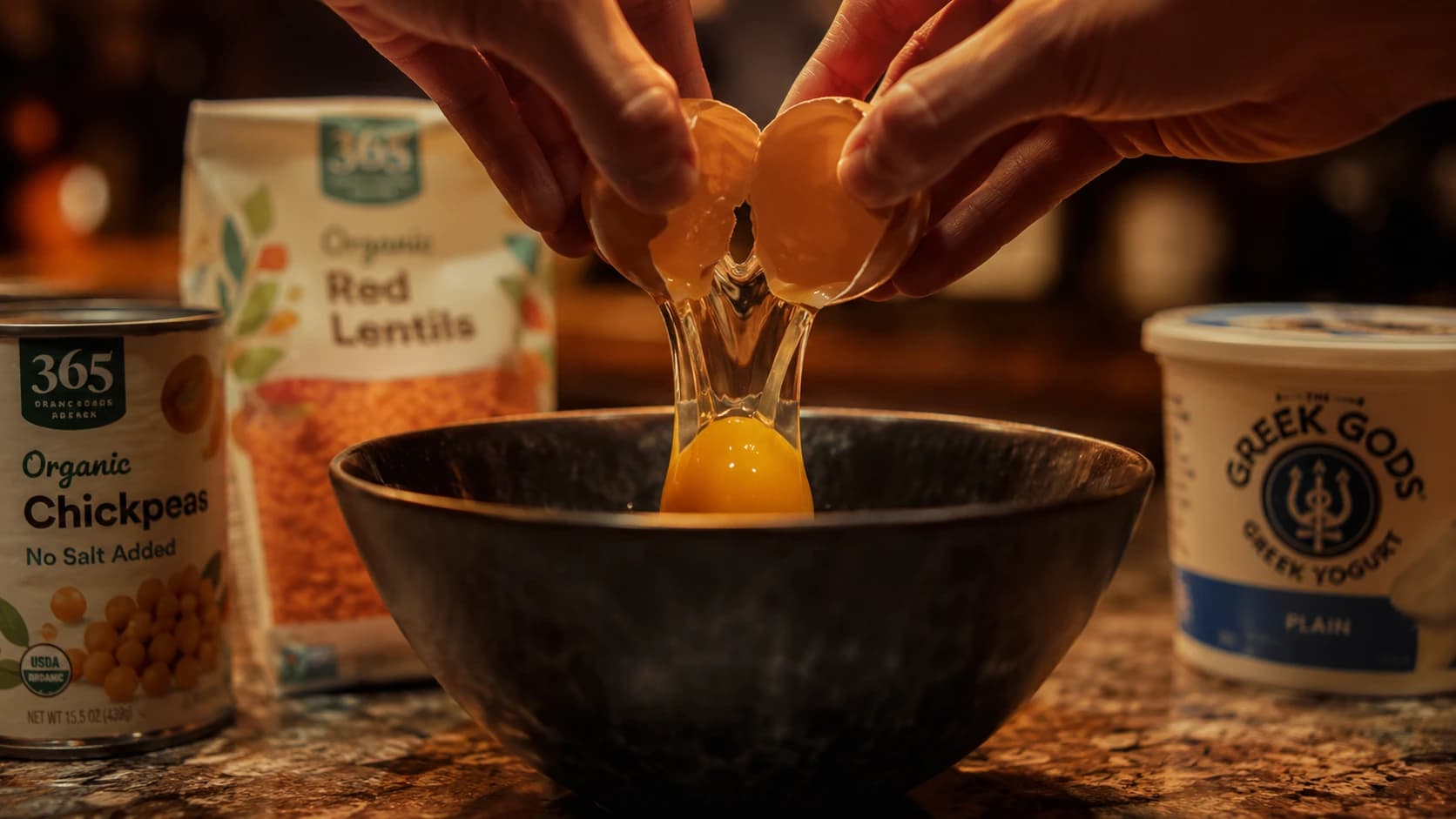
If you eat animal products but not meat, eggs and dairy are your most complete and bioavailable protein sources, meaning the protein they contain is absorbed and used with exceptional efficiency.
A single large egg provides approximately 6 grams of complete protein, including leucine, the amino acid most responsible for triggering muscle protein synthesis, which becomes increasingly important as hormonal signaling becomes less sensitive with age.
The dairy sources worth anchoring your week around:
- Greek yoghurt, 17 to 20 grams of protein per 7oz serving, plus casein for overnight muscle repair
- Cottage cheese, approximately 25 grams per 1 cup serving, one of the most protein-dense foods at any grocery store
- Skyr, similar to Greek yoghurt, slightly higher protein, excellent texture for women who find yoghurt too thin
- Hard cheeses, not a primary source, but Parmesan and Gruyère add up meaningfully as consistent daily additions
Legumes, the most underrated protein in midlife
Lentils, chickpeas, black beans, and edamame are the single most underrated protein source in the midlife nutrition conversation, and they come with benefits that go well beyond protein alone.
One cup of cooked lentils provides approximately 18 grams of protein alongside significant iron, folate, magnesium, and prebiotic fiber, all nutrients that become increasingly important during menopause for energy, bone health, mood regulation, and gut microbiome diversity.
Edamame deserves a specific mention because it is one of the very few plant foods that provides genuinely complete protein, meaning all essential amino acids in meaningful amounts, alongside isoflavones that research suggests may help moderate some menopausal symptoms in women whose gut microbiome can metabolize them effectively.
Tofu and tempeh, worth taking more seriously than you probably do
Soy-based foods remain one of the most debated topics in women's health nutrition, but the current scientific consensus reflected in positions from The North American Menopause Society is clear: moderate consumption of whole soy foods is not only safe for most women but may be actively beneficial.
From a pure protein standpoint:
- Firm tofu, approximately 10 grams of complete protein per 3oz serving
- Tempeh, approximately 16 grams per 3oz serving, fermented for better digestibility, firmer texture, richer flavor
Tempeh in particular is worth experimenting with if you have historically found tofu texturally uninspiring, because the fermentation process changes both the nutritional profile and the eating experience in ways that make it considerably more satisfying as a meal anchor.
Fish and shellfish, for women who eat seafood but not meat
For pescatarians, the protein picture becomes considerably more straightforward, and the options available are not just high in protein but specifically rich in nutrients that support midlife health in ways few other foods match.
- Salmon, 30 to 34 grams of complete protein per 5oz serving, plus omega-3 fatty acids linked to reductions in inflammation and potential moderation of menopausal symptoms
- Sardines and mackerel, similarly protein-dense, plus some of the highest dietary vitamin D available
- Shrimp and mussels, among the most protein-dense foods per calorie, with shrimp delivering approximately 20 grams per 3oz serving
- Oysters, the richest dietary source of zinc, which supports immune function, skin health, and hormonal signaling
Protein is no Longer Just a Fitness Topic
For women over 45, protein is no longer just a fitness topic. It becomes one of the most important nutritional foundations for maintaining strength, energy, mobility, and long-term health during perimenopause and menopause. As hormonal changes make muscle maintenance more difficult, getting enough high-quality protein consistently matters far more than it did in earlier decades.
The encouraging part is that you do not need to eat meat to meet those needs successfully. Eggs, dairy, legumes, soy foods, and seafood can all provide the protein, amino acids, and supportive nutrients your body relies on to protect muscle mass, support bone density, improve recovery, and help you stay resilient as you age.
The goal is not perfection or obsessively tracking every gram. It is building meals that regularly include meaningful sources of protein throughout the day and creating habits that support your body for the long term. Small, consistent choices made daily will always matter more than extreme dietary changes that are impossible to sustain.
Citations
- Bauer J et al. Evidence-based recommendations for optimal dietary protein intake in older people. Journal of the American Medical Directors Association, 2013
- Moore DR et al. Protein ingestion to stimulate myofibrillar protein synthesis requires greater relative protein intakes in healthy older versus younger men. Journals of Gerontology, 2015
- Messina M. Soy and Health Update: Evaluation of the Clinical and Epidemiologic Literature. Nutrients, 2016
- North American Menopause Society. The role of soy isoflavones in menopausal health. Menopause, 2011
- Cardon-Thomas DK et al. Dietary Protein in Older Adults: Adequate Daily Intake but Potential for Improved Distribution. Nutrients, 2017
- Smith GI et al. Omega-3 polyunsaturated fatty acids augment the muscle protein anabolic response. Clinical Science, 2011
- WHO. Protein and Amino Acid Requirements in Human Nutrition. WHO Technical Report, 2007