May 7, 2026
Protein timing doesn’t have to be complicated, dramatic, or tracked with the intensity of a detective solving a cold case. For women 45+, the real secret is simple: eat enough protein, spread it through the day, and pair it with strength-building movement.
Does Meal Timing Really Matter?
Meal timing matters, but let’s not give it more power than it deserves. It is not magic. It will not turn a doughnut into a wellness strategy just because you ate it at 9 a.m. But when your overall food quality is solid, timing can help support steadier energy, better blood sugar balance, and stronger muscle maintenance.
For women over 45, this becomes especially important because insulin sensitivity can decline with age, meaning your body may not process carbohydrates quite as smoothly as it once did. That’s why many researchers suggest eating more of your nutrition earlier in the day, when your body tends to handle food more efficiently.
In plain English: a protein-rich breakfast and balanced lunch may do more for your energy than skipping breakfast, surviving on coffee, and then eating your entire kitchen at 8 p.m.
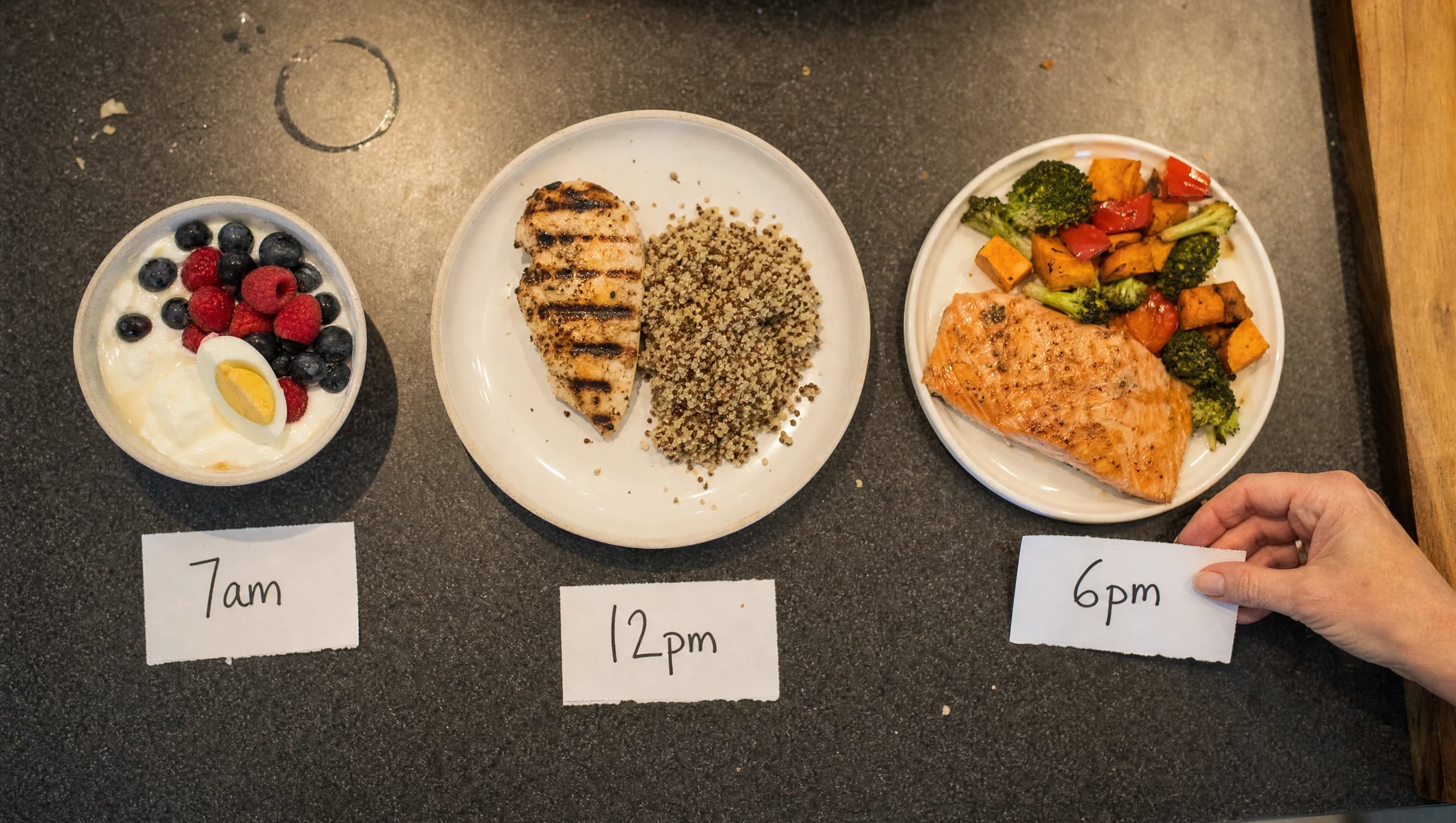
A helpful rhythm looks like this:
Breakfast: solid protein
Lunch: balanced and satisfying
Dinner: nourishing but not overly heavy
Snacks: protein-rich when needed
Not rigid. Not obsessive. Just sensible.
The Myth of “Perfect” Timing
There is no single perfect eating schedule for every woman over 45. Your friend may swear by eating every three hours, your sister may love intermittent fasting, and someone on the internet may insist that dinner after 6 p.m. is basically a crime against metabolism.
Thankfully, your body is not a spreadsheet.
What matters most is consistency, enough protein, and meals that fit your real life. If you regularly go too long without eating, you may end up tired, cranky, and very emotionally attached to whatever snack appears first. On the other hand, grazing all day without enough protein may leave you full but undernourished.
The sweet spot for many women is three balanced meals with protein at each one, plus one or two smart snacks if needed.
Why Protein Matters So Much After 45
After 45, protein becomes less of a “fitness thing” and more of a “please help me keep my strength, energy, and sanity” thing.
As estrogen levels decline during menopause, women naturally become more prone to losing lean muscle mass, gaining abdominal fat, and experiencing a slower metabolism. This age-related muscle loss is called sarcopenia, and while the name sounds like a villain from a sci-fi movie, the solution is surprisingly practical: eat enough protein and do strength-based movement.
Protein helps your body:
- Maintain and repair muscle
- Support bone health
- Stabilize appetite
- Improve satiety
- Support immune function
- Preserve strength and mobility
- Boost metabolism slightly because it takes more energy to digest
Most women over 45 need more protein than they think. While older guidelines focused on minimum intake, newer recommendations suggest higher amounts to support muscle, energy, and overall health.
For a 150-pound woman, that translates to roughly 68–81 grams of protein per day.
How Much Protein Should You Eat Per Meal?
A practical goal is 20–30 grams of protein per meal.
This matters because older muscles need a strong enough protein signal to stimulate muscle protein synthesis, which is the process your body uses to repair and build muscle. A tiny sprinkle of protein here and there may not be enough to tell your muscles, “Hey, we’re maintaining strength around here.”
Think of protein like a team meeting for your muscles. If only one person shows up, not much happens. But when enough protein arrives at the meal, your body gets the message.
A simple daily structure could look like this:
- Breakfast: 20–25g
- Lunch: 25–30g
- Dinner: 25–30g
That alone gets you to 70–85g per day which is already a strong, realistic target for many women. If needed, you can add a small protein-rich snack (like yogurt, eggs, or a shake).
Why Spreading Protein Throughout the Day Works Better
Many people eat very little protein at breakfast, a bit at lunch, and then most of it at dinner. You know the pattern: toast or cereal in the morning, a light salad at lunch, then chicken, fish, or steak at dinner.
The problem? Your muscles prefer steady support.
Research shows that spreading protein evenly across breakfast, lunch, and dinner can stimulate muscle protein synthesis more effectively than saving most of your protein for one large evening meal. In one controlled study, eating around 30 grams of protein at each main meal increased 24-hour muscle protein synthesis by about 25% compared with eating most protein at dinner.
So instead of treating dinner like the protein grand finale, aim to give your body smaller, stronger doses all day long.
Easy Protein Examples for Women 45+
Here are practical protein options that make it easier to hit that 20–30g target without turning every meal into a math exam.
| Food | Serving | Protein |
|---|---|---|
| Chicken breast, cooked | 3 oz | 25–26g |
| Salmon, cooked | 3 oz | ~22g |
| Eggs | 1 large | ~6g |
| Plain Greek yogurt | 1 cup | ~20g |
| Cottage cheese | 1 cup | ~28g |
| Firm tofu | 1 cup | ~40g |
| Cooked lentils | 1 cup | ~18–24g |
| Black beans | 1 cup | ~15g |
A few easy combinations:
Breakfast: 2 eggs + Greek yogurt
Lunch: chicken salad + beans
Snack: cottage cheese + berries
Dinner: salmon + vegetables + quinoa
Plant-based option: tofu stir-fry + lentils or beans
No culinary degree required.
Should You Eat Protein at Night?
Yes, dinner protein is absolutely fine. The goal is not to avoid food at night like your kitchen turns into a danger zone after sunset.
However, heavy late-night meals can interfere with sleep, digestion, and blood sugar regulation, especially during midlife when sleep may already be playing hard to get.
A good rule: enjoy a balanced dinner, but try to finish heavier meals a few hours before bed.
If you’re genuinely hungry later, choose something light and protein-rich, such as cottage cheese, Greek yogurt, or a small protein smoothie, rather than a sugary snack that may send your blood sugar on a roller coaster right when you’re trying to wind down.
Protein + Strength Training: The Real Power Couple
Protein is powerful, but protein plus strength training for women 45+ is where the magic happens.
After 45, muscle needs two things: the building blocks from protein and the signal from resistance exercise. Without strength training, protein helps maintain muscle, but with strength training, it becomes even more effective.
This does not mean you need to lift enormous weights while making intense gym faces in the mirror. Strength training can be simple:
- Bodyweight squats
- Wall push-ups
- Resistance band rows
- Dumbbell deadlifts
- Step-ups
- Glute bridges
- Pilates-based strength work
Two to three sessions per week can make a real difference in strength, confidence, posture, metabolism, and long-term independence.
Because honestly, being able to carry groceries, climb stairs, travel, garden, dance, and get up from the floor without making dramatic sound effects is a very worthy goal.
Meal Timing Tips That Actually Work
- Start with protein at breakfast, because it sets the tone for the day and helps prevent energy dips.
- Eat a satisfying lunch, not a sad desk salad that leaves you hunting for snacks an hour later.
- Keep dinner balanced but not overly heavy, especially if sleep is sensitive.
- Add protein snacks when meals are far apart or workouts leave you hungry.
- Prep easy proteins ahead of time, like boiled eggs, grilled chicken, lentils, tofu, tuna, or Greek yogurt.
- Do not chase perfection, because consistency beats perfection every time.
A Gentle Word on Menopause, Appetite, and Energy
Menopause can affect appetite, cravings, sleep, and body composition, so if food suddenly feels more complicated than it used to, you are not imagining it.
Lower estrogen can affect muscle repair, fat distribution, insulin sensitivity, and even hunger signals. That means the old “eat less and move more” advice often feels frustratingly outdated.
A better approach is: nourish more strategically.
That means enough protein, enough fiber, enough strength movement, enough sleep, and enough compassion for the fact that your body is changing—not failing.
Where Younger Fitness Fits In
At Younger, we believe women 45+ deserve fitness and wellness support that feels realistic, kind, and actually doable.
That’s why our Younger fitness programs are short, supportive, and designed for real midlife bodies. The workouts help you build strength, stay consistent, and support muscle health without overwhelming your day.
And because consistency is easier when you are not doing it alone, our supportive community gives you encouragement, accountability, and that lovely reminder that other women are navigating the same changes too.
Protein builds the body, strength training sends the signal, and community helps you keep showing up.
Citations
- Bauer et al. — Evidence-based protein recommendations for older adults
- Paddon-Jones and Rasmussen — Dietary protein recommendations and muscle health in aging
- Mamerow et al. — Dietary protein distribution positively influences 24-hour muscle protein synthesis
- Phillips et al. — Protein requirements and muscle maintenance in older adults
- American College of Sports Medicine — Nutrition and resistance training guidance
- International Society of Sports Nutrition — Protein intake and exercise position stand
- Menopause and metabolism research — Estrogen decline, insulin sensitivity, and body composition changes
- Circadian nutrition research — Meal timing, insulin sensitivity, and metabolic health
- Dietary Guidelines for Americans — Protein food sources and healthy eating patterns