July 22, 2026
Healthy living can start to feel strangely exhausting.
You go for a walk, but instead of watching the sunrise, you check your heart rate. You sit down to dinner with friends, but part of your brain is still counting calories. You finish a workout, but instead of noticing how strong or calm you feel, you glance at your watch to see whether you closed your rings.
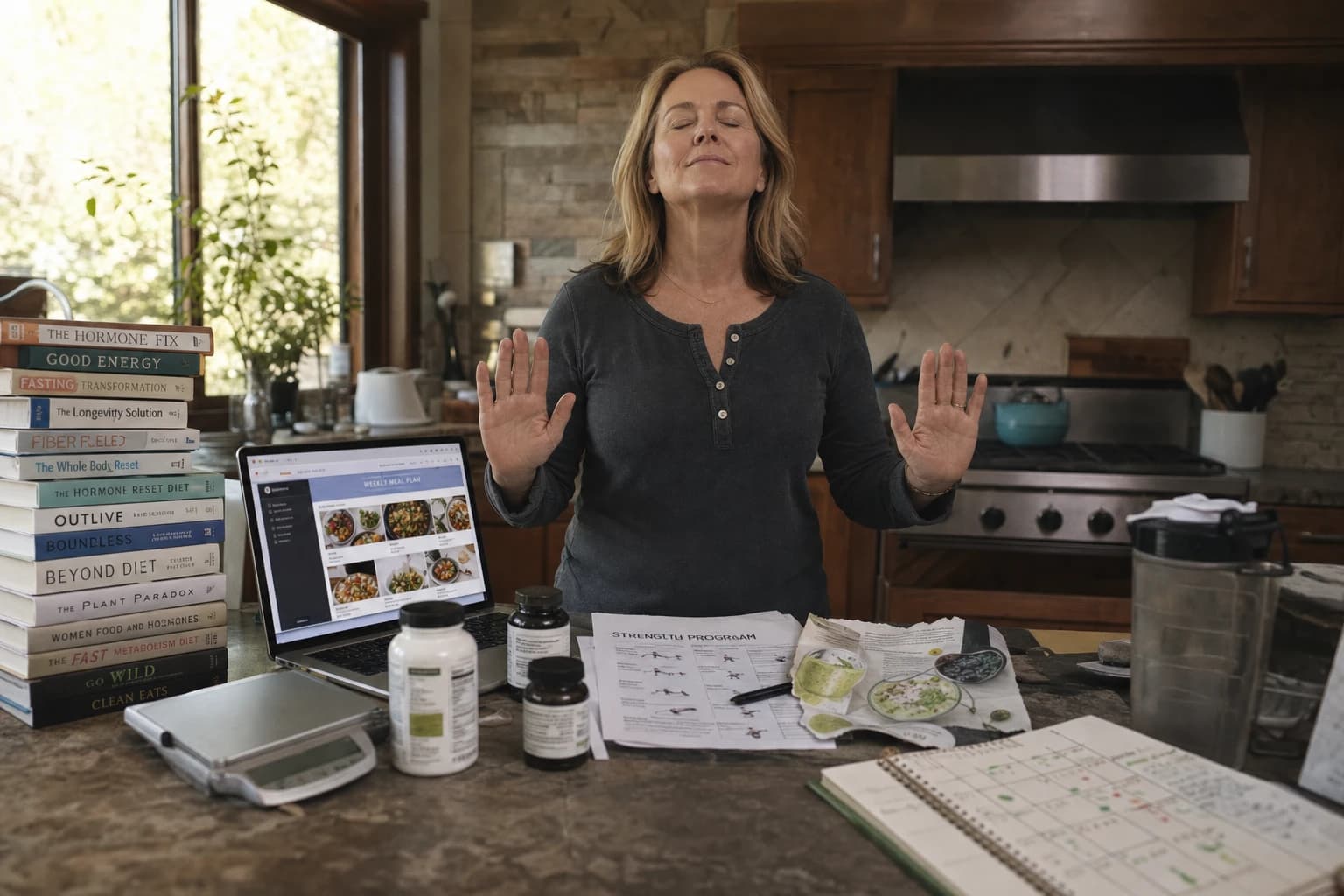
Somewhere along the way, midlife healthy living stopped feeling like self-care and started feeling like another job.
And that is a problem, because women in midlife already have enough on their plates. The menopausal transition can affect sleep, mood, body composition, and bone health, and the effects are not just physical. The World Health Organization notes that menopause can influence emotional, mental, and social well-being too. For many women, that means the body already feels different before a single app, tracker, or wellness rule enters the picture.
That is why healthy living for women over 50 may need less pressure, not more.
Your body needs support, not constant surveillance
There is real science behind taking care of yourself in midlife. Muscle mass naturally declines with age, and the U.S. Office on Women’s Health says sarcopenia typically begins around age 30, with about 3% to 5% muscle loss per decade. Bone loss also accelerates after menopause, and some women lose substantial bone mass in the years that follow.
That sounds serious, because it is. But notice what the body is asking for: support, consistency, and strength.
It is not asking you to obsess over every metric.
The most important movement habits for healthy aging for women are surprisingly straightforward. CDC guidance recommends at least 150 minutes of moderate activity each week, plus muscle-strengthening work on two or more days. WHO adds an important reminder: any movement is better than none, and all movement counts.
That means your walk counts. Your resistance workout counts. Your bike ride counts. Your dance class counts. Your stretching session after a stressful day counts.
Midlife wellness is not built by squeezing perfection out of every hour. It is built by returning to the basics often enough that your body can trust you.
Why enjoyment matters more than guilt
One of the most overlooked facts in exercise motivation for women is this: people are more likely to keep moving when they actually enjoy the movement.
Research published in Health Psychology Review found that a more positive emotional response during exercise predicts future physical activity. In plain English, when movement feels better, people are more likely to come back to it. Exercise-adherence research has also long reported that roughly half of people who start an aerobic exercise program stop within the first six months.
This is one reason extreme wellness plans fail so often. They may look disciplined on paper, but if they are built on guilt, punishment, or constant self-correction, they are much harder to sustain.
For women navigating fitness after 50, that matters. You do not need a plan that looks impressive for two weeks. You need long-term exercise habits that still feel doable six months from now.
That is where joyful movement and mindful movement become more than trendy phrases. They become strategy.
A workout you enjoy is not “less serious.” It is often more sustainable.
Tracking can help, but it should not run the show
Wearables and fitness apps are not the enemy. In fact, a systematic review found that wearable trackers may help create modest short-term increases in physical activity, especially in steps. For some women, that extra nudge is genuinely useful.
But there is a difference between a tool and a tyrant.
Research also shows a possible downside to constant self-tracking. Some users experience more negative affect, anxiety, or pressure around goal-based feedback, and earlier experimental work found that tracking steps could increase walking while decreasing enjoyment of walking. In other words, the tracker may increase the behavior while quietly draining some of the pleasure from it.
That is the tension at the center of modern menopause wellness.
Yes, tracking can be helpful. But no, it is not the same as body awareness.
If your watch becomes so loud that you stop noticing your own energy, hunger, stress, recovery, or mood, it may be time to step back and ask a different question: is this helping me feel healthier, or just more monitored?
A simpler approach to menopause exercise
The best menopause exercise plan is not necessarily the most optimized one. It is the one that protects your muscles, supports your bones, calms your nervous system, and fits into a real life.
For some women, that looks like strength training for women over 50 twice a week and walks on most days. For others, it may include Pilates, yoga, hiking, swimming, or short home workouts. A 2024 overview of reviews found some evidence that yoga and, to a lesser extent, aerobic exercise may help some menopausal symptoms, even though there is not enough evidence to crown one perfect exercise prescription for all women.
That uncertainty is actually liberating.
You do not need the perfect workout. You need a meaningful one.
Maybe today’s walk is not about burning a certain number of calories. Maybe it is about clearing your head after a difficult morning. Maybe walking for menopause is valuable not only because it supports cardiovascular health, but because regular physical activity reduces symptoms of depression and anxiety. And if that walk happens outside, even better: systematic-review evidence suggests nature-based walking can improve mood and reduce stress and rumination.
Maybe today’s workout is not about closing your rings. Maybe it is about feeling strong enough to carry groceries easily, travel confidently, sleep better, and enjoy the life you are building.
That is what a healthy aging lifestyle really looks like.
Midlife health should support your life
The deeper truth is this: the healthiest routine is not always the most measured one. It is usually the one you can live with.
A sustainable approach to a healthy lifestyle after 50 is often beautifully ordinary. Regular walks. Strength training. Protein-rich meals. Enough sleep. Time outside. Less sitting. More consistency. Less drama.
And maybe, sometimes, the healthiest thing you can do is put the watch away.
Look up at the sky. Take a deep breath. Feel your feet on the ground. Let movement be movement again.
Because midlife healthy living should not feel like another full-time job.
It should help you feel more alive inside your own life.