July 17, 2026
Why Menopause Changes the Way You Should Build Your Plate
If you've reached your late forties or fifties, you've probably noticed that the foods you've eaten for years don't seem to affect your body the same way anymore. Maybe maintaining your weight suddenly feels more difficult, your energy isn't as steady throughout the day, or you're finding it harder to recover after workouts. Many women assume they're simply eating "too much," but menopause changes far more than appetite.
Menopause is not just the end of your menstrual cycle. It is a whole-body transition that affects metabolism, muscle, bone, heart health, and the way your body stores fat. As estrogen levels decline, the risk of cardiovascular disease gradually increases, bone loss accelerates, muscle mass naturally begins to decline, and blood sugar regulation can become less efficient. All of these changes make nutrition more important than ever before.
The encouraging news is that there isn't a special "menopause diet" you need to follow. You don't need to eliminate entire food groups, survive on salads, or buy expensive supplements advertised as hormone-balancing miracles. The strongest evidence continues to support something much simpler: building balanced meals with whole, nutrient-dense foods that provide your body with the nutrients it now needs more intentionally.
A hormone-friendly plate is much more than a way to eat for your hormones. It's also a plate that supports healthy aging, stronger muscles, healthier bones, a healthier heart, and more stable energy throughout the day. Instead of focusing on restriction, the goal is to build meals that help your body thrive during this new stage of life.
The Hormone-Friendly Plate Formula
One of the easiest ways to build meals after forty-five is to stop thinking about calories and start thinking about your plate.
Rather than counting every gram of food, imagine dividing your plate into sections that naturally provide the nutrients your body needs.
Fill Half Your Plate with Vegetables and Fruit
The largest portion of every meal should come from vegetables and fruit.
This recommendation isn't about dieting. It's about giving your body more fiber, vitamins, minerals, antioxidants, and volume while naturally creating meals that are satisfying without feeling restrictive.
Leafy greens, broccoli, peppers, carrots, tomatoes, cauliflower, berries, apples, oranges, and countless other colorful fruits and vegetables all contribute valuable nutrients that support overall health. They also help increase fiber intake, which becomes especially important after menopause for digestive health, blood sugar regulation, and heart health.
The World Health Organization recommends adults aim for at least 400 grams of fruits and vegetables every day, while Harvard's Healthy Eating Plate encourages making vegetables and fruits the largest part of every meal.
The more colorful your plate, the more nutritional variety you're likely getting.
Make One Quarter of Your Plate Protein
Protein deserves much more attention after menopause than it often receives.
As women age, maintaining muscle becomes more challenging because declining estrogen influences muscle protein turnover and recovery. That makes every meal an opportunity to support muscle maintenance.
Healthy protein choices include:
- Fish
- Chicken or turkey
- Eggs
- Greek yogurt
- Cottage cheese
- Tofu
- Tempeh
- Lentils
- Chickpeas
- Beans
- Edamame
Protein doesn't only help preserve muscle. It also increases satiety, supports recovery after exercise, and helps stabilize energy throughout the day.
The American Heart Association also recommends eating fish—particularly fatty fish like salmon or sardines—at least twice each week because they provide both high-quality protein and heart-healthy omega-3 fats.
Choose High-Fiber Carbohydrates
Carbohydrates often get blamed for weight gain during menopause, but carbohydrates themselves aren't the problem.
The type of carbohydrate matters.
Whole grains, beans, lentils, oats, quinoa, brown rice, and whole-grain breads digest more slowly than refined carbohydrates like white bread, pastries, or sugary cereals. That slower digestion helps create steadier blood sugar levels while keeping you fuller for longer.
Fiber also supports digestive health and may help improve cholesterol levels.
The World Health Organization recommends adults consume at least 25 grams of naturally occurring fiber every day, while Harvard emphasizes choosing whole grains over refined grains because they have a gentler effect on blood sugar and insulin.
Think of carbohydrates as fuel.
Choosing better fuel simply allows your body to perform better.
Don't Fear Healthy Fats
For years, many women believed that eating less fat automatically meant better health.
Today, we know the story is much more nuanced.
Healthy fats are essential for hormone production, brain health, heart health, and helping your body absorb fat-soluble vitamins.
Excellent sources include:
- Extra virgin olive oil
- Avocados
- Walnuts
- Almonds
- Chia seeds
- Flaxseeds
- Pumpkin seeds
- Salmon
Rather than eliminating fat, focus on replacing saturated and trans fats with healthier unsaturated fats whenever possible.
Menopause isn't the time to fear fat.
It's the time to choose better fats more intentionally.
The Foods Your Body Needs More After 45
As hormones change, several nutrients deserve extra attention because they support the areas menopause affects most.
Calcium
Bone loss accelerates after menopause as estrogen declines.
Women between the ages of 51 and 70 generally need 1,200 mg of calcium each day.
Good sources include:
- Yogurt
- Milk
- Cheese
- Calcium-fortified plant milks
- Tofu made with calcium
- Sardines
- Salmon with bones
Vitamin D
Vitamin D helps your body absorb calcium and plays an important role in bone health.
Women aged 51–70 generally require 600 IU daily, increasing to 800 IU after age 70.
Because vitamin D is difficult to obtain through food alone, some women may benefit from supplementation after discussing it with their healthcare provider.
Fiber
Fiber supports:
- Heart health
- Blood sugar control
- Digestive health
- Feeling full after meals
Beans, vegetables, fruit, oats, lentils, seeds, and whole grains are all excellent sources.
Foods to Enjoy Less Often
A hormone-friendly plate isn't about perfection.
It's about making better choices more often.
Foods worth limiting include:
- Sugary drinks
- Highly processed snacks
- Refined grains
- Frequent desserts
- Processed meats
- Deep-fried foods
- Foods high in saturated and trans fats
These foods aren't "forbidden."
They simply shouldn't crowd out the foods doing the most work for your health.
Stop Dieting. Start Nourishing.
Perhaps the biggest mindset shift after menopause is recognizing that eating less isn't always the answer.
Many women spend years trying to shrink their portions while unknowingly under-fueling their muscles.
A better strategy is building meals that leave you satisfied while supporting strength, recovery, and stable energy.
Skipping meals, constantly dieting, or surviving on salads often backfires by increasing hunger later in the day while making it harder to meet your protein and nutrient needs.
Instead of asking:
"How can I eat less?"
Try asking:
"How can I build a better plate?"
That simple change in perspective often leads to healthier choices that feel sustainable instead of restrictive.
What Does a Hormone-Friendly Day of Eating Look Like?
Breakfast could be a bowl of Greek yogurt topped with berries, walnuts, and chia seeds alongside a serving of oats.
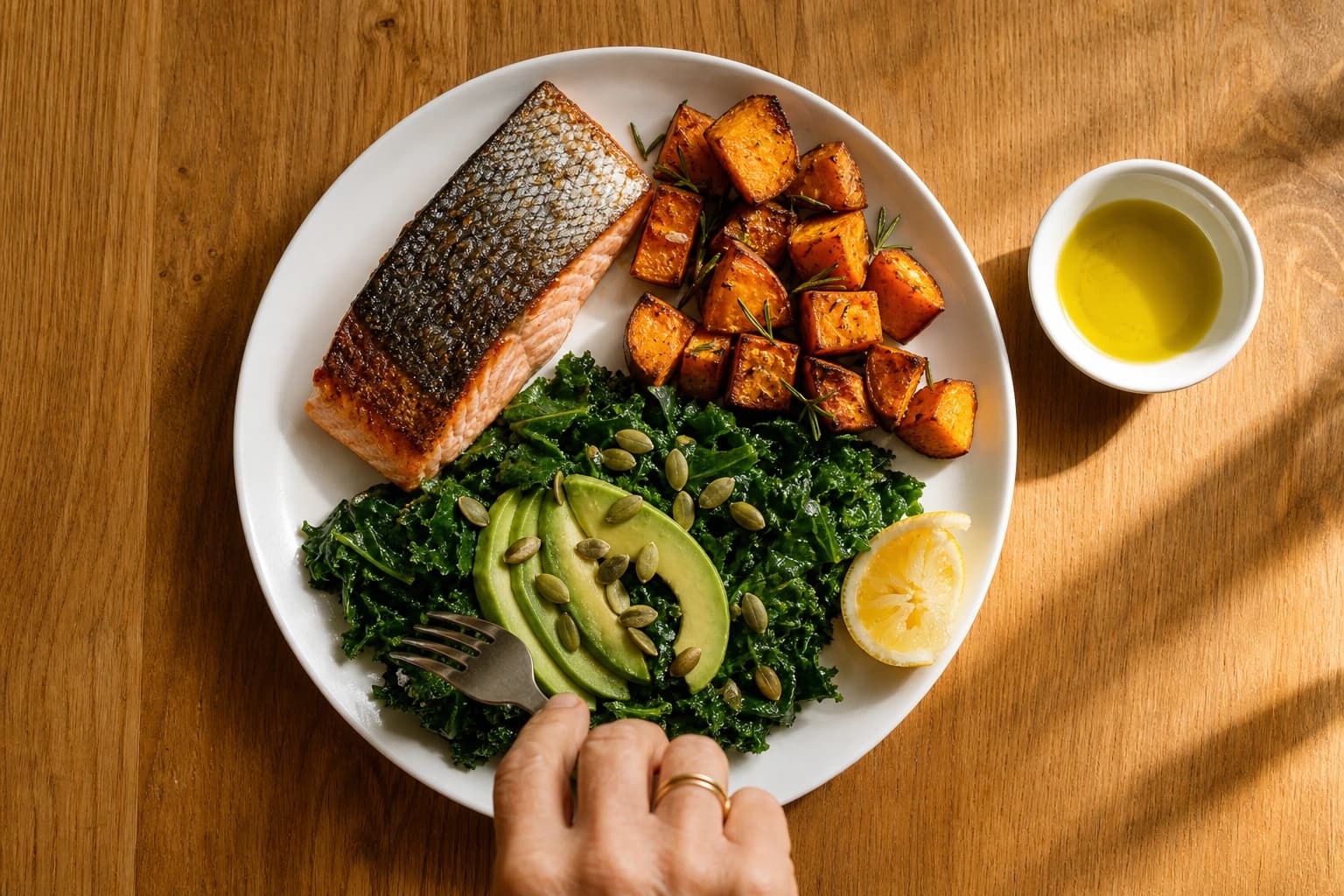
Lunch might include grilled salmon over a large salad filled with colorful vegetables, olive oil dressing, and quinoa.
Dinner could be roasted chicken or tofu served with broccoli, carrots, brown rice, and avocado.
If you need a snack, choose foods that contribute nutrition rather than simply satisfying cravings.
Greek yogurt, cottage cheese with fruit, hummus with vegetables, edamame, or a handful of nuts all fit beautifully into a hormone-friendly eating pattern.
Final Thoughts
Building a hormone-friendly plate isn't about chasing perfection or following another restrictive diet.
It's about giving your body what it needs most during a stage of life when nutrition matters more than ever.
After forty-five, every meal becomes an opportunity to support stronger muscles, healthier bones, better heart health, steadier energy, and healthier aging.
The most effective plate isn't the lowest in calories.
It isn't the lowest in carbohydrates.
And it certainly isn't the most complicated.
It's colorful.
It's balanced.
It's built around real food.
Because the goal after menopause isn't simply eating less.
It's nourishing yourself well enough to feel strong for decades to come.
References
- Office on Women's Health. Menopause and Your Health.
- National Institutes of Health Office of Dietary Supplements. Calcium Fact Sheet for Health Professionals.
- National Institutes of Health Office of Dietary Supplements. Vitamin D Fact Sheet for Health Professionals.
- World Health Organization. Healthy Diet.
- American Heart Association. Fats in Foods.
- American Heart Association. Fish and Omega-3 Fatty Acids.
- Harvard T.H. Chan School of Public Health. Healthy Eating Plate.
- Dietary Guidelines for Americans. Dietary Guidelines for Americans.