April 14, 2026
Dealing with hot flashes during workouts? Learn science-backed ways to adjust your fitness routine during menopause and stay active with confidence.
When the Heat Hits Mid-Workout…
Let’s share one story that might feel relatable.
Anna is 49, a busy professional who squeezes in her gym time right after work, then hurries home to her kids and dog. So yes, the gym is her reset button. That day felt no different. She rolled out her mat, took a deep breath, and started her session.
Then… it hit.
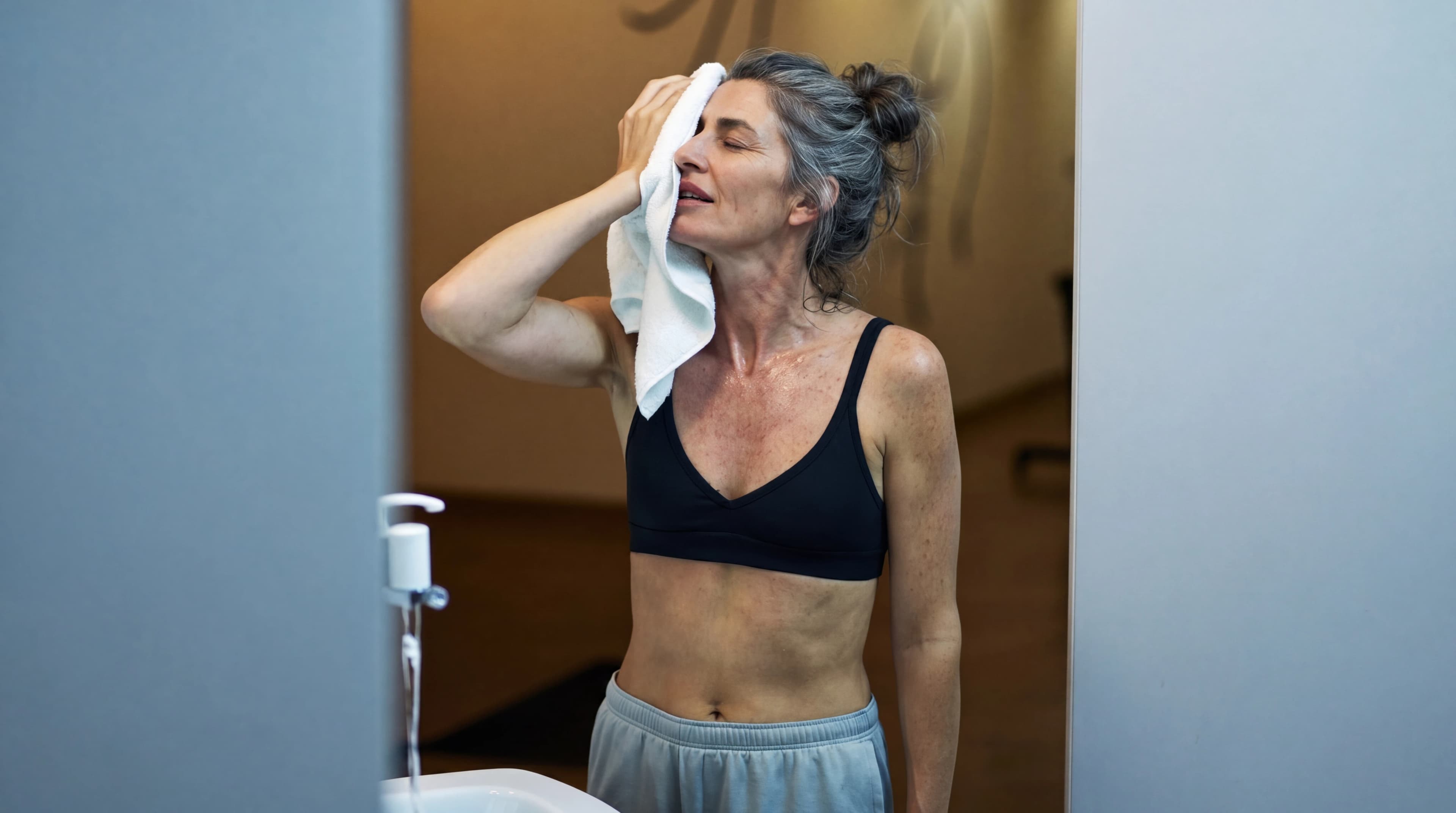
A sudden wave of heat rushed through her body. Her face flushed instantly, her neck turned red, and within seconds, sweat began pouring down like she had sprinted a mile, except she hadn’t. Her heart raced, her focus broke, and she paused, confused and a little frustrated.
“Not again… here?”
She glanced around. No one seemed to notice, but for her, the moment felt loud. Should she push through? Stop? Pretend nothing is happening?
Hot flashes have a way of showing up uninvited, especially at the most inconvenient times, like right in the middle of your workout.
So let me ask you, have you ever had to stop mid-exercise because your body suddenly felt like it was overheating?
Why Hot Flashes Happen and Just How Common They Really Are
Let’s talk facts, because understanding what’s going on in your body can make all the difference.
Hot flashes, also known as vasomotor symptoms, are one of the most common signs of menopause. In fact, research shows that around 75 to 80 percent of women experience them, which means the majority of women go through this at some point .
Menopause itself typically begins between the ages of 45 and 55, with an average around 51 . And here’s the kicker, hot flashes are not just a short phase you simply get over. Studies show they can last 7 to 11 years on average, and in some cases even up to 14 years .
Yes, years. Those numbers can sound a bit overwhelming.
So what is happening behind the scenes?
Hormonal shifts, especially declining estrogen, affect your body’s internal thermostat, the hypothalamus. When your brain thinks you are overheating, it triggers a cooling response. That includes an increased heart rate, dilation of blood vessels, and suddenly, a wave of heat and sweating.
How to Adjust Your Workout Without Giving It Up
Quitting exercise might feel like the easier option when hot flashes crash your workout… but it’s not the one that serves you in the long run.
Science consistently shows that regular physical activity during menopause helps:
- Maintain bone density
- Support heart health
- Improve mood and sleep
- Reduce stress (which can actually trigger hot flashes)
So instead of throwing in the towel, it’s all about learning how to adjust, to move smarter, not harder.
Here’s how to actually do that in real life:
1. Time It Smart (Because Timing Really Does Matter)
If you’ve ever felt like your workout turns into a sauna session out of nowhere, timing could be the hidden culprit.
Hot flashes are often triggered or intensified by external heat, which means:
- A crowded gym at peak hours
- Midday temperatures
- Poor ventilation
…can all make things worse.
So what can you do differently?
Try experimenting with:
- Morning workouts when your body (and environment) is naturally cooler
- Evening sessions when temperatures drop and your nervous system is winding down
- Shorter, split workouts (e.g., 20 minutes twice a day instead of one long session)
And here’s a small but powerful trick: Set up your space intentionally.
Stand near a fan, crack open a window and position your mat where airflow is best. It sounds simple, but these little tweaks can dramatically reduce how intense a hot flash feels when it hits.
2. Cool Down Strategically (Don’t Just Push Through)
We’ve all been taught to “push through the burn.” But this? This isn’t that kind of burn.
When a hot flash starts, your body is already in overdrive. Forcing yourself to keep going can actually make it worse and leave you feeling drained instead of energized.
Instead, think of cooling down as part of your workout.
Here’s your go-to reset routine:
- Pause for 30–60 seconds
- Take a few sips of cold water
- Place a cool towel on your neck or wrists
- Move toward airflow (fan, AC, open window)
These signals tell your body: “You’re safe. You can cool down now.”
And the faster your body gets that message, the shorter and less intense the hot flash tends to be.
Pro tip? Keep a “cool kit” in your gym bag: small towel, water bottle, maybe even a facial mist.
3. Your Outfit Matters More Than You Think
That cute, tight, synthetic workout set? It might be working against you.
During menopause, your body becomes more sensitive to temperature changes. Fabrics that trap heat or don’t breathe well can turn a mild warm-up into a full-blown hot flash.
So what should you wear instead?
Think:
- Breathable fabrics like cotton or bamboo
- Moisture-wicking materials that actually let your skin breathe
- Layered outfits you can peel off quickly
For example:
Start with a light jacket or long sleeve → warm up → remove it as your body heats up.
And honestly? Feeling physically comfortable in your clothes can make a huge difference in how confident and in-control you feel during your workout.
4. Adjust Intensity But Stay Consistent
Here’s where a lot of women get stuck.They think: “If I can’t train at my usual intensity, what’s the point?”
But that’s the wrong question.
The real question is:
“What kind of movement does my body need today?”
Instead of going all-out, try this:
- Swap long runs for brisk walking or light cycling
- Choose interval-style workouts (short bursts + recovery)
- Use lighter weights with more repetitions
- Add low-impact options like swimming (a total game-changer for cooling your body)
- Include mobility, yoga, or stretching days to support recovery
And here’s the science-backed truth: strength training is especially important right now. It helps maintain muscle mass and bone density both of which naturally decline during menopause.
So no, you’re not “doing less.”
You’re doing what works better for your body right now.
5. Breathe Through It
This one gets overlooked way too often but it’s powerful.
When a hot flash hits, your breathing usually becomes shallow and fast. That sends a signal to your nervous system that something’s wrong… which can actually intensify the experience.
So instead of reacting automatically, you can interrupt the cycle.
Try this simple technique:
- Inhale slowly through your nose for 4 seconds
- Exhale gently through your mouth for 6–8 seconds
- Repeat for 1–2 minutes
This activates your parasympathetic nervous system, the part responsible for calming your body down.
Think of it as hitting a “reset button” from the inside.
Some women even find that practicing this type of breathing regularly (not just during workouts) helps reduce the frequency of hot flashes over time.
So next time the heat rises mid-workout you’ll know exactly what to do.
It’s Not Just Fitness
Menopause isn’t just physical. It’s emotional, mental, and deeply personal and navigating it alone? That’s where it gets tough.
That’s exactly why Younger Fitness exists.
This isn’t just another fitness app thrown into the mix.
It’s built specifically for women 45+ going through menopause with:
- Workouts designed for your changing body
- Expert-backed guidance you can trust
- A supportive community that gets it
Because sometimes, what you need isn’t just a workout…
It’s knowing you’re not the only one pausing mid-session, catching your breath, and thinking, “What is happening to me?”
Inside Younger App, that moment? It’s understood.
So instead of giving up on movement, you adapt, stay active and connected.
And most importantly you keep showing up for yourself.
References
- World Health Organization (WHO). Menopause and healthy ageing
- StatPearls Publishing (NIH). Menopause
- Office on Women’s Health (U.S. Department of Health & Human Services). Menopause symptoms
- Harvard Health Publishing. Perimenopause: Rocky road to menopause
- North American Menopause Society (NAMS). Menopause Practice Guidelines
- SWAN Study (Study of Women’s Health Across the Nation). Duration of menopausal symptoms
- MGH Center for Women’s Mental Health. Exercise and menopausal symptoms