June 18, 2026
For years, creatine was associated almost exclusively with bodybuilders and athletes chasing bigger muscles and better performance. Today, however, the conversation has changed dramatically. Researchers are increasingly exploring how creatine supplementation may benefit women, especially those over the age of 45, a period when hormonal changes, declining muscle mass, and reduced bone density begin to affect overall health and quality of life.
The question many women ask is simple: Should women over 45 take creatine, or is it unnecessary?
The short answer is that growing scientific evidence suggests that creatine for women 45+ may offer several meaningful health benefits beyond athletic performance. However, like any supplement, it should be considered within the context of individual health goals, medical history, and lifestyle.
Let's take a closer look at what the science says.
Why Women Over 45 Face Unique Health Challenges
After the age of 45, many women begin experiencing significant physiological changes. These changes are often linked to perimenopause and menopause, during which estrogen levels gradually decline.
This hormonal shift can contribute to:
- Loss of muscle mass (sarcopenia)
- Reduced strength and physical performance
- Lower bone mineral density
- Increased fatigue
- Changes in body composition
- Cognitive changes such as brain fog
According to research published by the National Institutes of Health (NIH), adults can lose approximately 3% to 8% of muscle mass per decade after age 30, with the rate of decline accelerating after age 60. For women, menopause may further amplify this process due to hormonal changes.
As a result, preserving muscle and maintaining functional strength become increasingly important, not only for appearance but also for mobility, independence, and long-term health.
This is where creatine supplementation enters the discussion.
What Is Creatine and How Does It Work?
Creatine is a naturally occurring compound found in muscles and the brain. It is produced by the liver, kidneys, and pancreas and can also be obtained through foods such as red meat and fish.
Its primary role is to help produce adenosine triphosphate (ATP), the body's immediate energy source during short bursts of activity.
When creatine stores are increased through supplementation, the body gains greater capacity to produce energy efficiently, particularly during resistance training and other high-intensity activities.
While athletes have used creatine for decades to improve performance, researchers now recognize that its benefits may extend far beyond the gym.
The Benefits of Creatine for Women 45+
Improved Muscle Strength and Lean Mass
One of the strongest arguments in favor of creatine for women over 45 is its ability to support muscle maintenance and growth.
Several studies have shown that creatine supplementation combined with resistance training can increase lean muscle mass and improve strength in middle-aged and older adults.
A meta-analysis published in the Journal of Gerontology found that older adults taking creatine while participating in resistance exercise experienced significantly greater gains in muscle strength compared with those taking a placebo.
This matters because maintaining muscle mass is about much more than aesthetics. Strong muscles help support joints, improve balance, reduce fall risk, and make everyday activities easier.
For women entering menopause, preserving muscle can also help counteract the gradual decline in metabolism that often accompanies aging.
Potential Support for Bone Health
Bone health becomes a major concern for many women after 45.
According to the International Osteoporosis Foundation, approximately one in three women over age 50 will experience osteoporotic fractures during their lifetime.
While creatine is not a replacement for calcium, vitamin D, or medical treatment when needed, some studies suggest it may indirectly support bone health by improving muscle strength and increasing the effectiveness of resistance training.
Stronger muscles place beneficial mechanical stress on bones, encouraging the maintenance of bone density. Researchers continue to investigate whether creatine supplementation may have direct effects on bone metabolism, but current evidence suggests its greatest benefit likely comes through enhanced exercise performance.
Better Physical Function and Mobility
One often overlooked aspect of healthy aging is maintaining independence.
Activities such as carrying groceries, climbing stairs, gardening, traveling, and playing with grandchildren all depend on strength and mobility.
Research indicates that older adults using creatine supplements alongside exercise programs often demonstrate improvements in functional performance measures, including walking speed, chair-rise ability, and overall strength.
These gains may seem small at first glance, but over time they can contribute significantly to maintaining quality of life.
Can Creatine Help Brain Function?
Interestingly, some of the most exciting research on creatine for women 45+ focuses on cognitive health.
The brain requires enormous amounts of energy to function properly. Since creatine plays a key role in energy production, researchers have explored its potential effects on mental performance.
Emerging evidence suggests that creatine may help support:
- Memory
- Mental processing speed
- Cognitive performance during stress
- Brain energy metabolism
A review published in Nutrients highlighted promising findings regarding creatine's role in supporting brain health, particularly in situations where energy demand is elevated.
Although more research is needed specifically in menopausal women, experts increasingly view creatine as a supplement with potential benefits extending beyond muscle tissue.
For women experiencing occasional brain fog during menopause, this area of research is particularly intriguing.
Common Concerns About Creatine
Does Creatine Cause Weight Gain?
This is one of the most common questions women ask.
The answer is somewhat nuanced.
Creatine can increase water retention inside muscle cells, especially during the first few weeks of supplementation. This often results in a modest increase in body weight, typically between 1 and 3 pounds (0.5–1.5 kg).
However, this is not fat gain.
Instead, it reflects increased intracellular hydration, which may actually support muscle function and recovery.
Women concerned about the scale should understand that this initial weight change is generally considered normal and does not indicate an increase in body fat.
Is Creatine Safe?
Perhaps the most reassuring aspect of creatine is its extensive safety record.
The International Society of Sports Nutrition (ISSN) has repeatedly stated that creatine monohydrate is among the most thoroughly researched dietary supplements available.
Numerous long-term studies have found no evidence that creatine harms healthy kidneys, liver function, or overall health when used at recommended doses.
For healthy adults, a typical maintenance dose is:
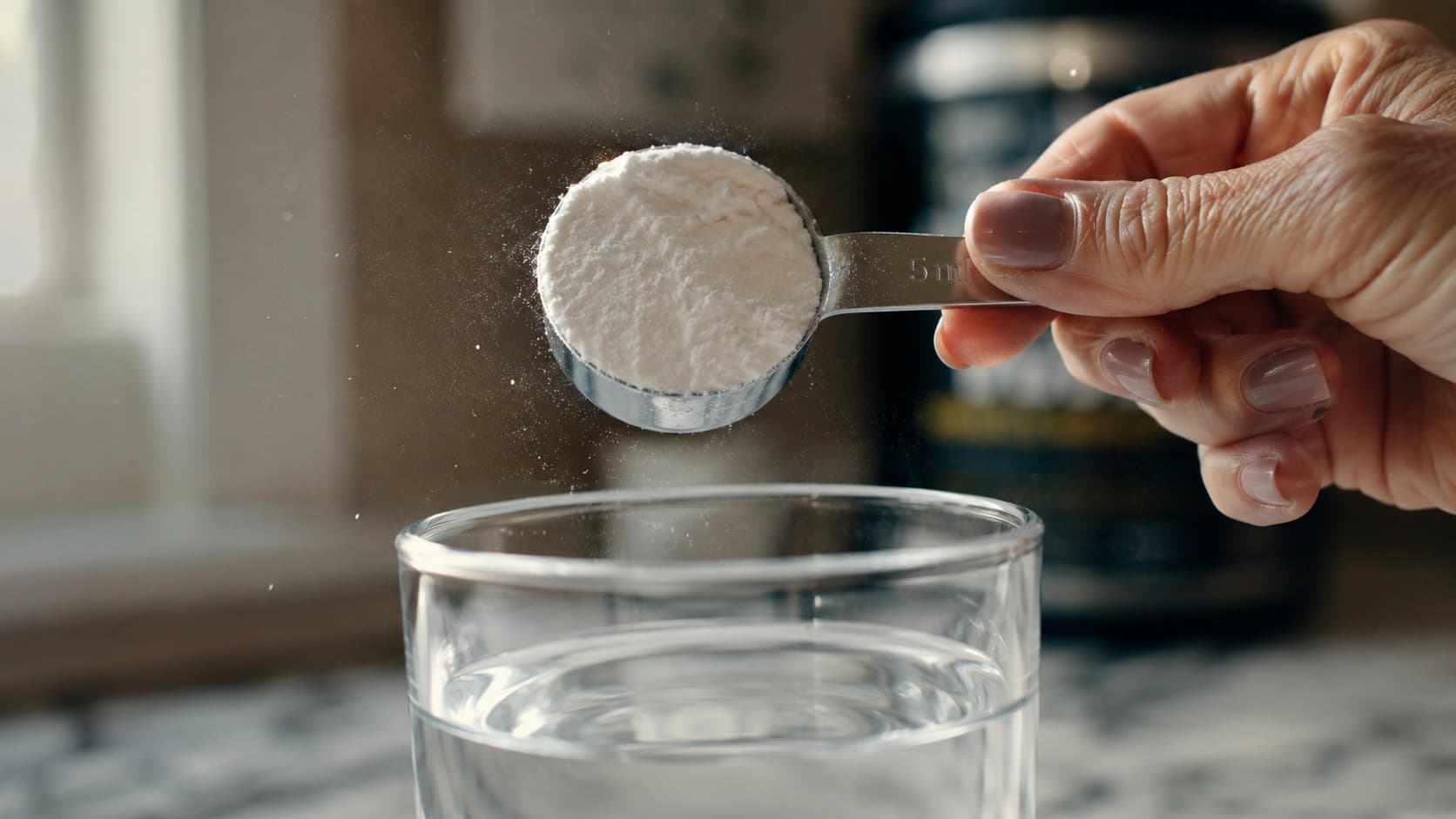
3–5 grams of creatine monohydrate per day
Women with kidney disease or specific medical conditions should consult a healthcare professional before beginning supplementation.
What Do the Statistics Say?
The growing interest in creatine for women over 45 is supported by several noteworthy findings:
- Adults may lose 3%–8% of muscle mass per decade after age 30.
- Women can experience accelerated muscle decline during and after menopause.
- Approximately one-third of women over 50 will experience osteoporotic fractures.
- Research reviews consistently show greater strength gains when creatine is combined with resistance training.
- Creatine remains one of the most studied sports nutrition supplements, with hundreds of peer-reviewed studies supporting its safety and effectiveness.
Taken together, these statistics highlight why maintaining muscle and physical function becomes increasingly important as women age.
Who Should Consider Taking Creatine?
Creatine supplementation may be particularly worth considering for women over 45 who:
- Participate in strength training
- Want to preserve muscle mass
- Are concerned about age-related strength decline
- Wish to support active aging
- Follow vegetarian or vegan diets
- Are interested in supporting cognitive health
Vegetarians and vegans may benefit especially because dietary creatine intake tends to be lower without meat or fish consumption.
How to Choose the Best Creatine
When selecting a supplement, simplicity is often best.
The most researched and widely recommended form is:
Creatine Monohydrate
Look for products that contain:
- Pure creatine monohydrate
- No unnecessary fillers
- Third-party testing when possible
Despite marketing claims, more expensive forms have not consistently demonstrated superior results compared with standard creatine monohydrate.
So, Creatine for Women 45+: Yes or No?
Based on the current body of scientific evidence, the answer leans strongly toward yes for many women.
Creatine for women 45+ is no longer viewed solely as a sports supplement. Research increasingly suggests it may support muscle strength, healthy aging, physical function, exercise performance, and potentially cognitive health as well.
While it is not a miracle solution and works best alongside regular resistance training, adequate protein intake, quality sleep, and an overall healthy lifestyle, creatine appears to be a practical, affordable, and well-researched tool for women navigating the challenges of midlife and beyond.
Rather than asking whether creatine is only for athletes, the more relevant question today may be whether women over 45 can afford to ignore one of the most extensively studied supplements available.
For many women seeking to remain strong, active, and independent for years to come, creatine supplementation may be a valuable part of the equation.
References & Citations
- Candow DG, Chilibeck PD, Forbes SC. Creatine Supplementation and Aging Musculoskeletal Health. Journal of Clinical Medicine.
- International Society of Sports Nutrition (ISSN). Position Stand: Safety and Efficacy of Creatine Supplementation.
- National Institutes of Health (NIH). Age-Related Muscle Loss and Sarcopenia Research.
- International Osteoporosis Foundation. Osteoporosis Facts and Statistics.
- Avgerinos KI et al. Effects of Creatine Supplementation on Cognitive Function. Nutrients Journal.
- Forbes SC, Candow DG, Krentz JR. Creatine Supplementation and Resistance Training in Older Adults. Journal of Gerontology.